
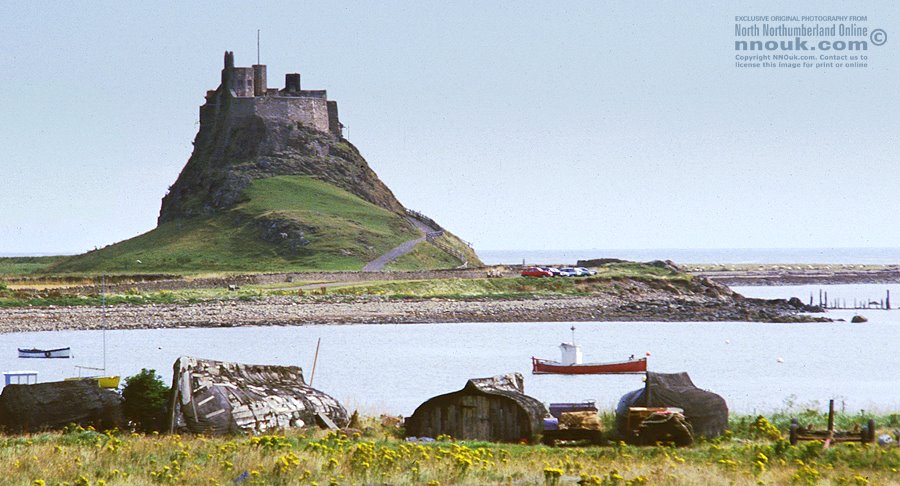
 Despite its name, this is an island you can reach by road. But only for some of
the time...
Despite its name, this is an island you can reach by road. But only for some of
the time...
Twice a day, the sea sweeps in across the 3-mile-long causeway, cutting off access to and from the mainland. This isn't like a ford which you can drive through, these are dangerous currents with deep water that will quickly cover a car and wash it away.
The wise traveller checks the timetable of safe crossing times, which can be found at the beginning of the causeway and at local Tourist Information Centres.
Some residents say the island being cut off twice a day gives it a magical and tranquil quality.
Other websites
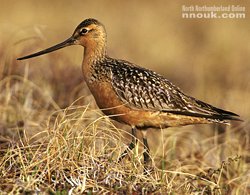
A bar-tailed godwit. Photo: U.S. Fish and Wildlife Service.
Wildlife on Holy Island
The Island is a National Nature Reserve and a wetland of international significance. The tidal mudflats, saltmarshes and dunes provide an environment that is home to many interesting plants, insects and birds. Rarer plants include the purple northern marsh orchid and early marsh orchid.
Six internationally important species of wildfowl and wading birds overwinter at Lindisfarne: pale-bellied brent geese (this is their only regular wintering place in Britain), greylag geese, wigeon, grey plovers, bar-tailed godwits and redshanks.
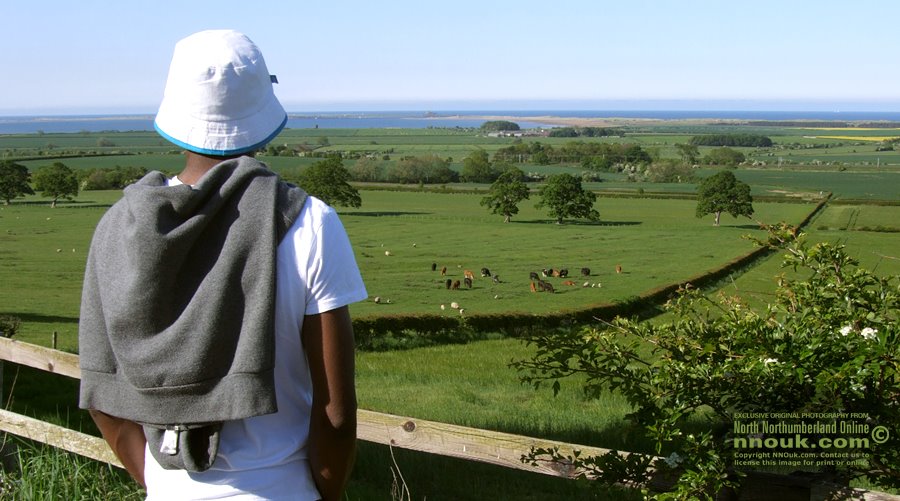
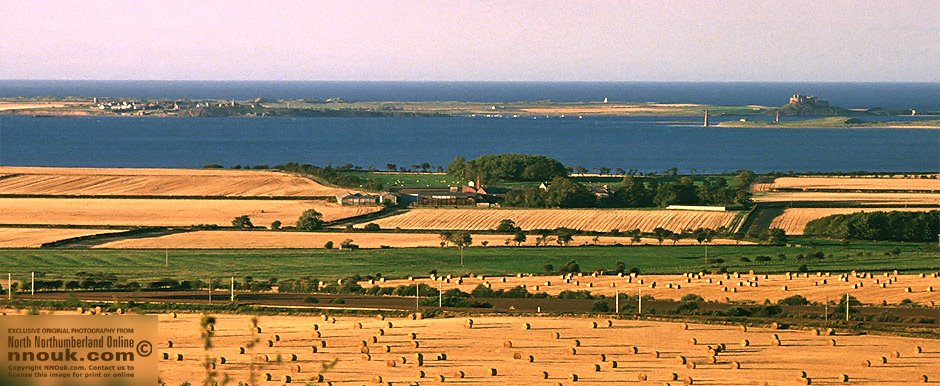
Looking towards Holy Island from inland.
The treacherous sands in days gone by
From the book 'Local Records' by John Sykes. Published in 1833.
'September 5 - Two postilions in the service of Mr Maddocks of Wooler Haugh Head were on the afternoon of this day employed with four horses in conveying a gentleman's carriage in which were himself and family to Holy Island. About nine o clock in the evening the postilions set out on their return homewards with their horses and shortly after a thick fog came on.
'Strong apprehensions were in consequence entertained by the islanders for their safety which next morning were found too fatally verified for soon after day light the bodies of the two unfortunate men and one of the horses were discovered lifeless on the sands. Another horse which by some means survived stood motionless beside its dead companion. The remaining two horses were supposed to have been buried in a quick sand many of which abound in this dangerous passage.'